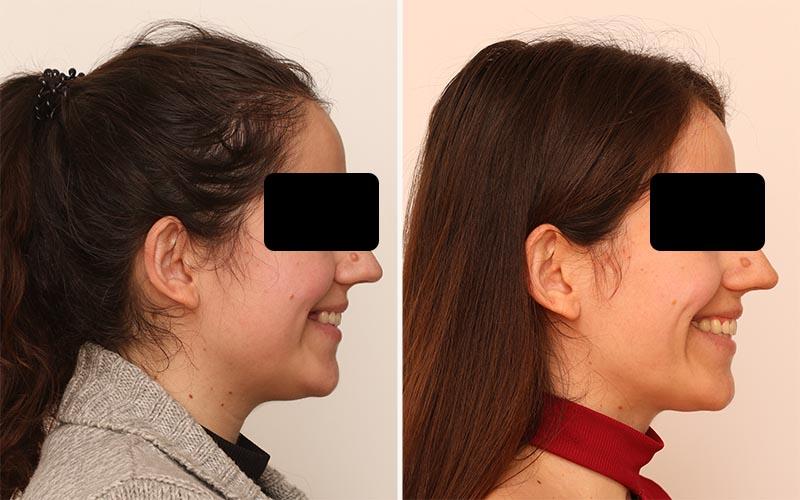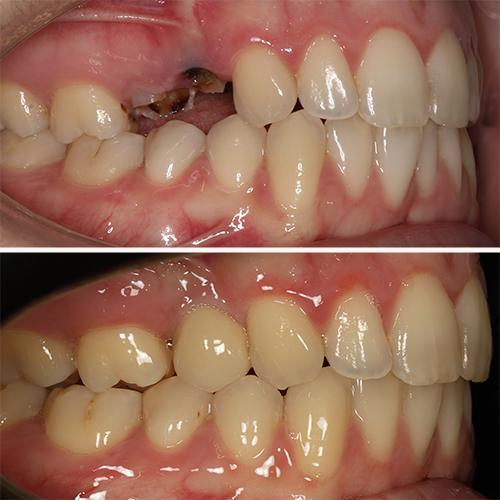




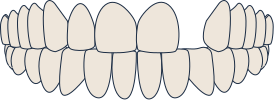

What is missing teeth?
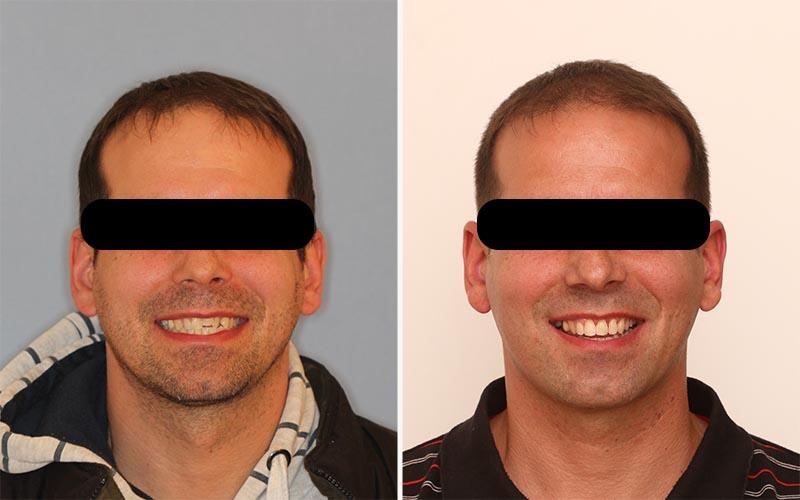
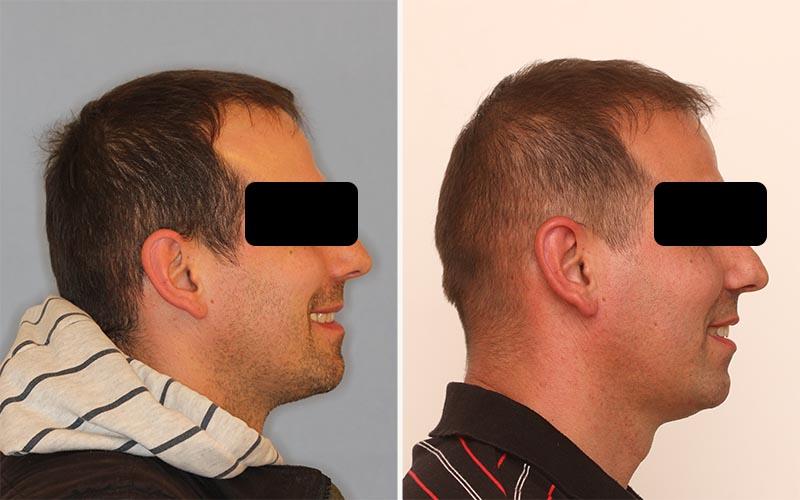
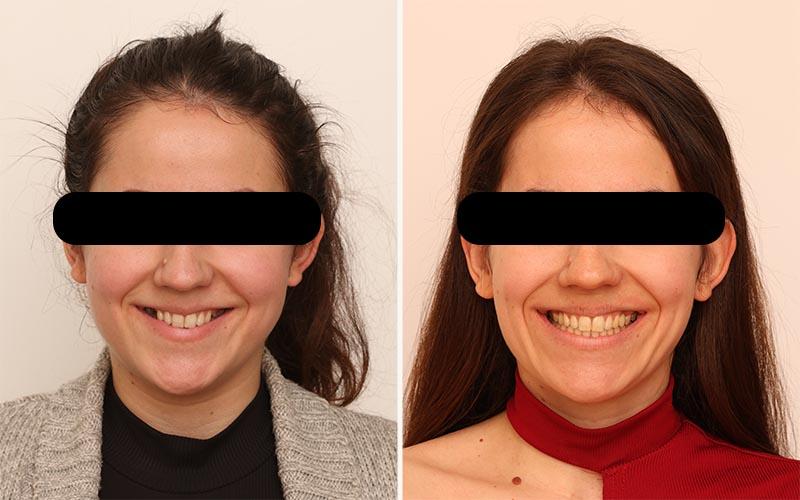
Missing teeth means that one or more teeth are absent from the dental arch. This can happen due to tooth loss, for example from decay, trauma, or severe gum disease, but it can also be genetic, when a tooth simply never develops. In both cases, missing teeth can affect chewing, speech, bite, and the appearance of the face over time.
Why is it important to treat missing teeth?
Missing teeth aren’t just an aesthetic issue. When teeth are absent, neighboring teeth can shift, chewing becomes uneven, and the jaw joint can become overworked. Additionally, the bone in the area of the missing tooth can start to resorb over time. Treating missing teeth is therefore important not only for a beautiful smile but also for healthy chewing and long-term dental stability.
How can missing teeth be treated?
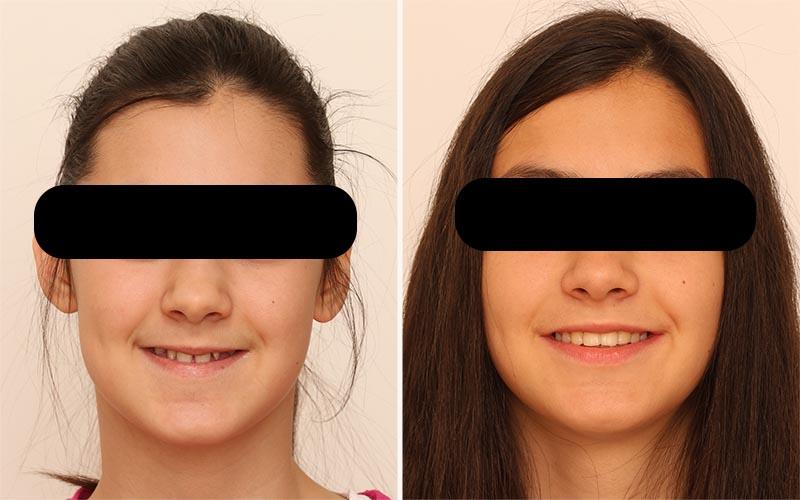
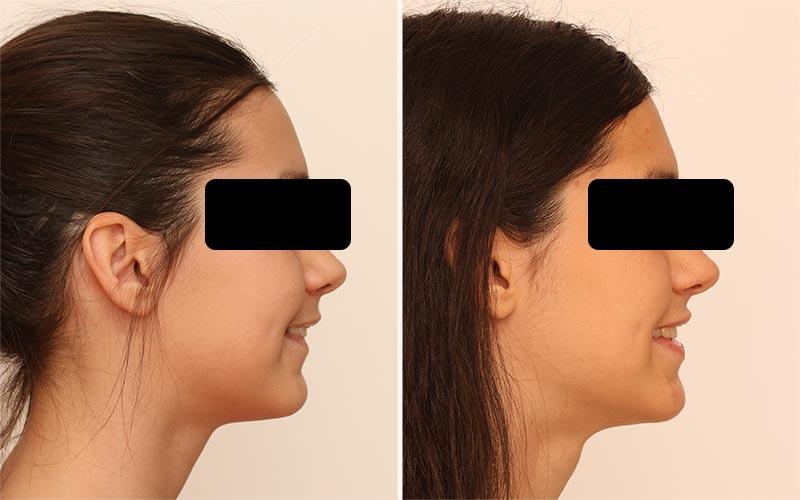
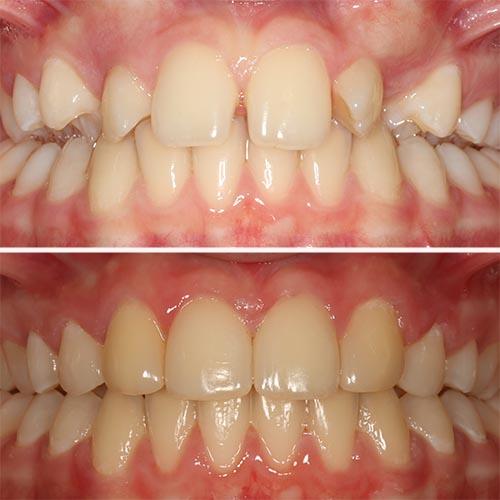
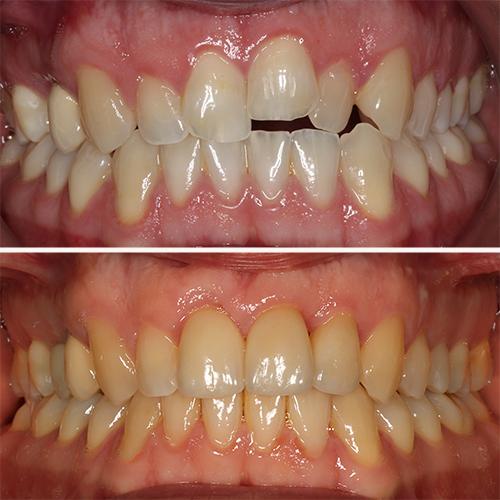
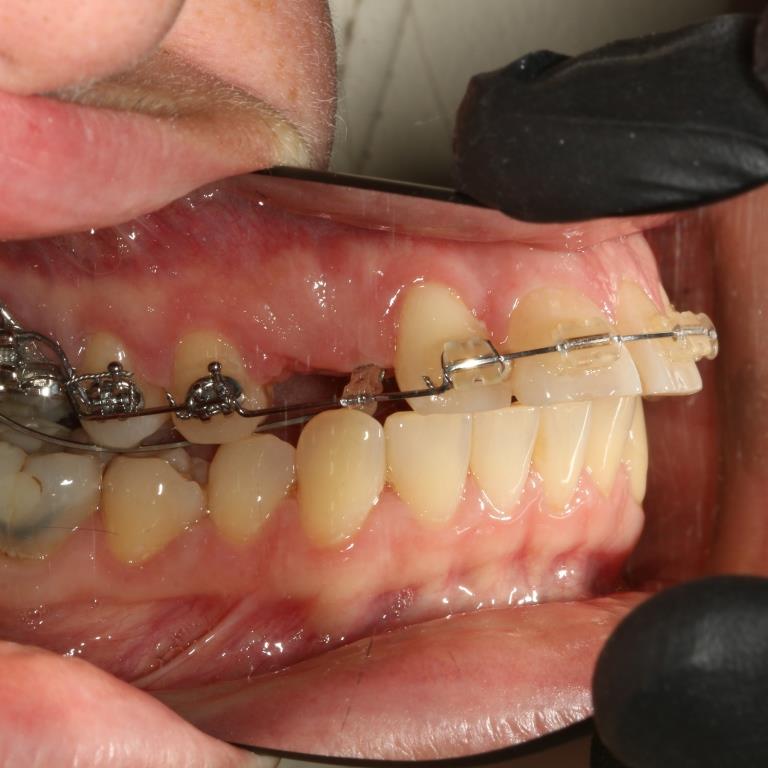
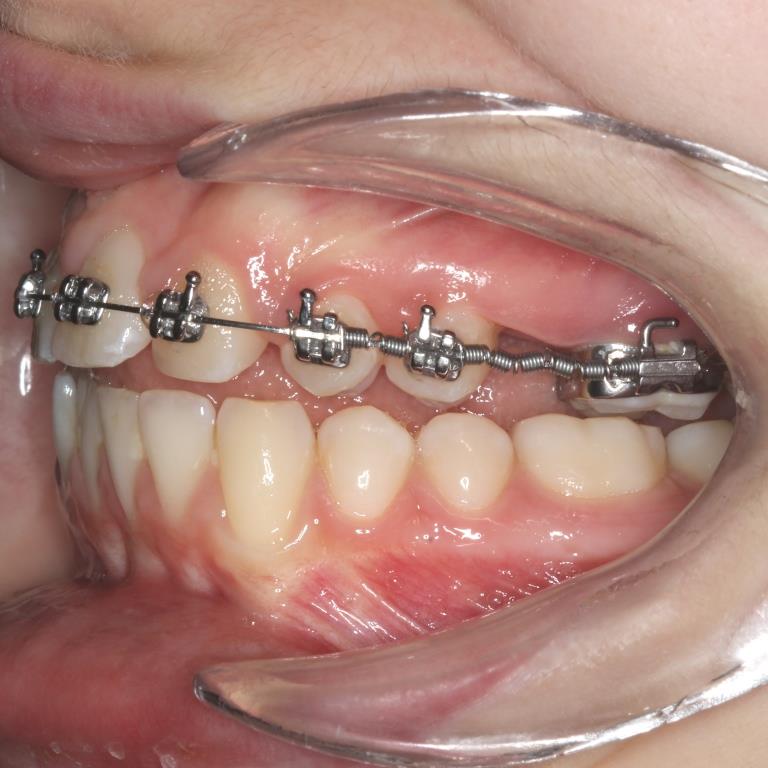
Missing teeth, whether lost or congenitally absent, can now be treated in every case, and replacement isn’t always the first step. In smaller gaps, orthodontic treatment can often solve the problem—for example, moving a canine into the place of a missing lateral incisor, or shifting a second molar into the position of a lost first molar.
Of course, traditional solutions—bridges, implants, or partial removable dentures—are also available, especially for larger gaps. Every treatment is personalized, taking into account the bite, jaw structure, and aesthetic needs, so that the final result is natural, stable, and harmonious.
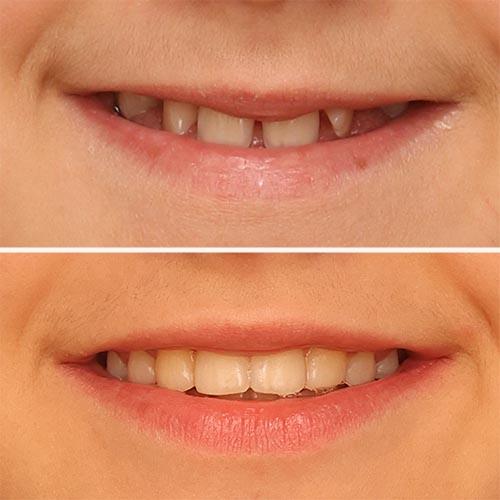
With orthodontic methods, we can “replace” a missing tooth relatively easily. This approach has several advantages. For example, no foreign material is introduced into the body—we use the patient’s own teeth to fill the gap. Often, so-called mini-implants are needed for this type of tooth movement. These orthodontic mini-implants do not fuse with the bone. They help prevent unwanted movement of other teeth, which can shorten treatment time. The great thing is that once they are no longer needed, they can be simply removed.
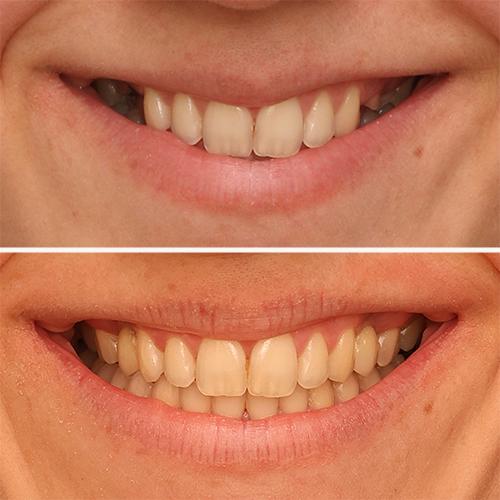
At the Dr. Borbély Orthodontic Studio, our goal is to make the transformation brought by our treatments accessible to as many people as possible. A liberated smile shouldn’t be a matter of money! That’s why we offer our services with unusually low monthly installment options.
During the first year of treatment, the monthly payment ranges between HUF 90,000 and 130,000—this includes the cost of the appliance and its adjustments. Following that, each visit entails a fee of HUF 45,000. For simpler treatments, the total costs may be even lower. After planning your treatment, we provide a detailed quote so that your expenses are easy to anticipate and manage.